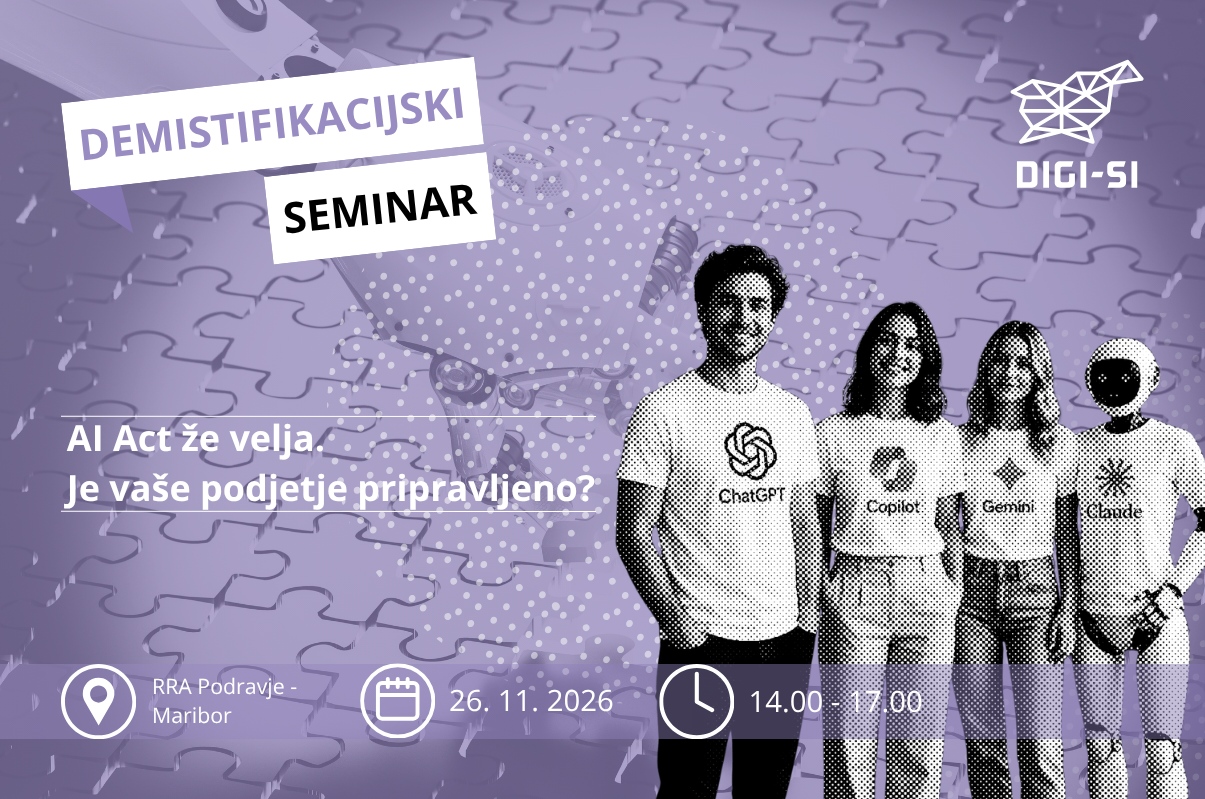
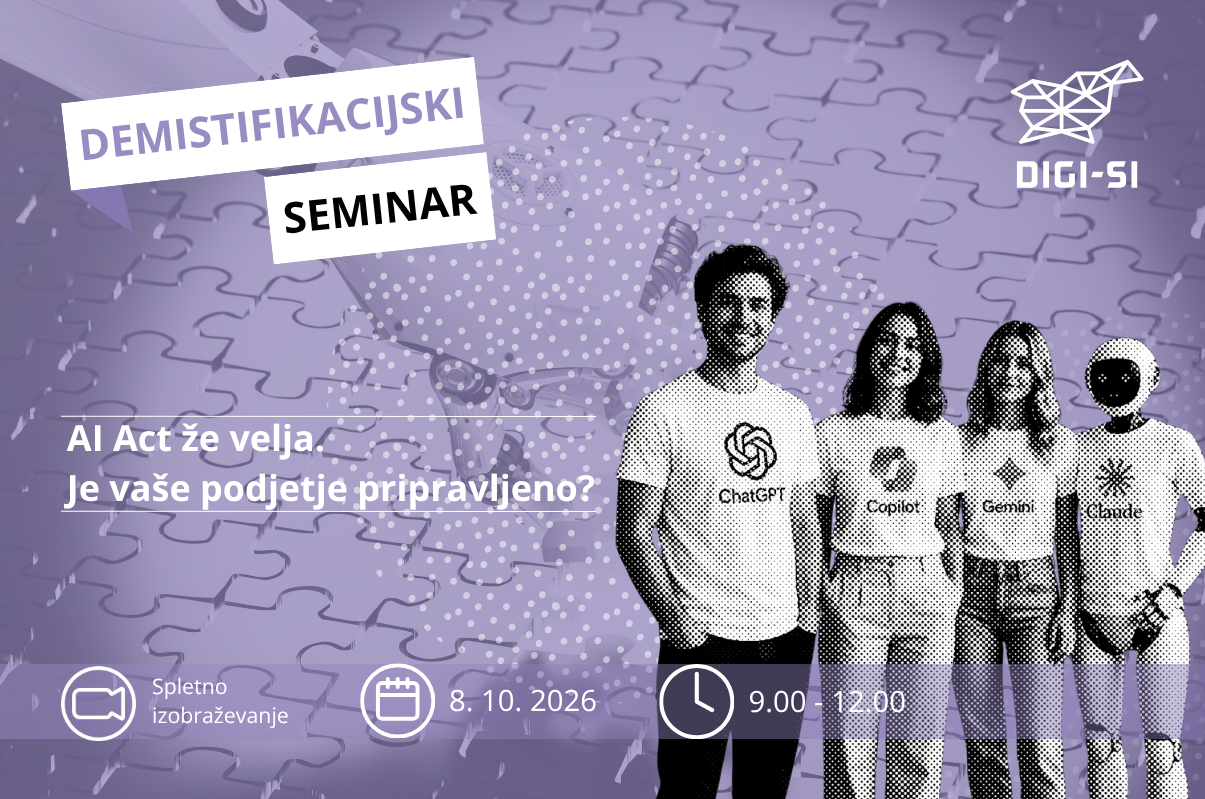
ChatGPT, Copilot, Gemini, Claude … your employees are probably already using them. But do you know what your company needs to sort out because of this?
As of August 2026, additional important obligations under the European Artificial Intelligence Act (AI Act) have come into effect. The new rules don't only concern large tech companies and AI developers — they matter for small and medium-sized businesses that use artificial intelligence in their day-to-day work.
We'll translate the AI Act from legal language into concrete steps you can implement in your company. No lengthy legal theory. Just practical examples, clear instructions, and a checklist for your organisation.
Speaker: Dr. Emilija Stojmenova Duh
Do you know how you would answer these questions?
- Do we need to keep a register of AI tools used by employees?
- What must an internal AI use policy include?
- What are employees allowed to enter into ChatGPT and other publicly available AI tools?
- When are we required to inform a user that they are communicating with artificial intelligence?
- How should we handle texts, images, and other content generated with AI?
- How do we verify whether an AI solution provider is compliant?
- Which AI Act requirements actually apply to our company?
If you don't have a clear answer to any of these questions, this workshop is for you.
The workshop will draw on real-world use cases involving ChatGPT, Microsoft Copilot, Claude, Gemini, internal chatbots, and AI solutions in HR, marketing, customer support, and automated decision-making.
After the workshop, you will be able to:
- Identify your organisation's role under the AI Act
- Recognise prohibited and specially regulated uses of AI
- Distinguish between obligations that apply today and those taking effect later
- Meet transparency and AI content labelling requirements
- Vet AI solution providers and contractual partners
- Assign responsibilities and draw up a concrete action plan for your company
No prior legal or technical knowledge is required.
All participants will receive a practical AI Act checklist to immediately assess the situation in their organisation, identify potential gaps, and define next steps.