Improved Production Process Planning for Individualised Tools
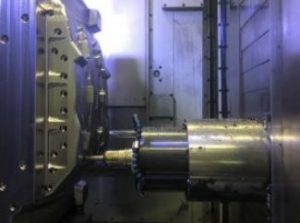
Plamtex Int d.o.o. is a family-owned company with more than 25 years of tradition, offering turnkey, all-in-one solutions ranging from technological product development and the development and manufacture of tools to prototype test injection moulding and high-volume production of technical products. The company also manufactures tools for the production of lighting components for the front and rear lights of premium automotive brands. It produces a wide range of plastic products for the automotive industry, the household appliance industry, optics, measuring instruments and other sectors.
Through cooperation with researchers from the Department of Computer Systems and the Department of Intelligent Systems at the Jožef Stefan Institute, as well as Hahn-Schickard-Gesellschaft für angewandte Forschung e.V. from Germany, the company shortened the production time of tools for injection moulding thermoplastic components for the automotive industry. The resulting reduction in delivery times for higher-margin products enables the company to increase sales.
In designing the solution, two areas of expertise proved particularly important: first, the development of advanced computer architectures and algorithms for processing large volumes of data, which is one of the core research areas of the Department of Computer Systems; and second, research and development in intelligent systems, data mining and optimisation, which are among the research areas of the Department of Intelligent Systems.
Result
The technological solution reduces production costs in the manufacture of tools for plastic injection moulding. Due to a lower number of errors in tool production, the company saves raw materials and energy and reduces the environmental impact of production.
A key step in the development of the technological solution was the use of artificial intelligence and machine learning techniques. Based on historical tool production data, the researchers developed models for predicting the duration of individual operations in the tool manufacturing process.
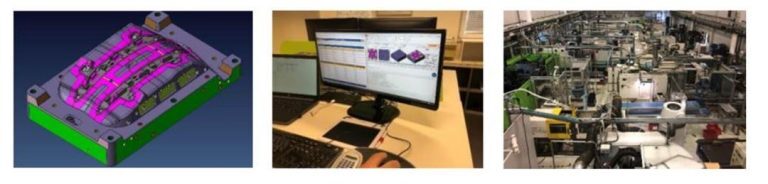
The information sources used to develop the predictive models included CAD tool designs, data on the actual duration of production operations available in the technological database, and expert knowledge of tool design and manufacturing. Automated prediction of operation durations now helps the company’s experts optimise tool production. This enables shorter production times, less scrap, energy savings and the preparation of more competitive offers.
The cooperation, established on the basis of the company’s technological challenge, successfully combined the expert knowledge of company specialists and researchers, resulting in a solution that once again confirmed the benefits of transferring knowledge from academic institutions to industry.
Key Success Factors
The key success factors of the project were close cooperation and regular meetings among project team members, the willingness of researchers to understand the basics of tool design, and the willingness of company experts to understand the requirements for applying new methods in practice. The availability of data and expert knowledge required for the machine learning phase was also essential.
The role of the Technology Transfer and Innovation Centre at the Jožef Stefan Institute should also be highlighted. The Centre worked with all project partners from the initial stages, when suitable contacts had to be identified within individual technology centres for the company’s technological challenge, through to the final stages, when the company improved its production process by introducing the developed technology.
The cooperation took place within the European KET4CleanProduction project. The Technology Transfer and Innovation Centre at the Jožef Stefan Institute played a key role in establishing and financing the project.